
His Holiness Catholicos Aram I has proclaimed 2026 the Year of Spiritual Renewal, in line with a tradition established early in his pontificate. Warning against the performative tendencies in modern life, His Holiness has identified factors that have been eroding the spiritual life among the Armenian faithful.
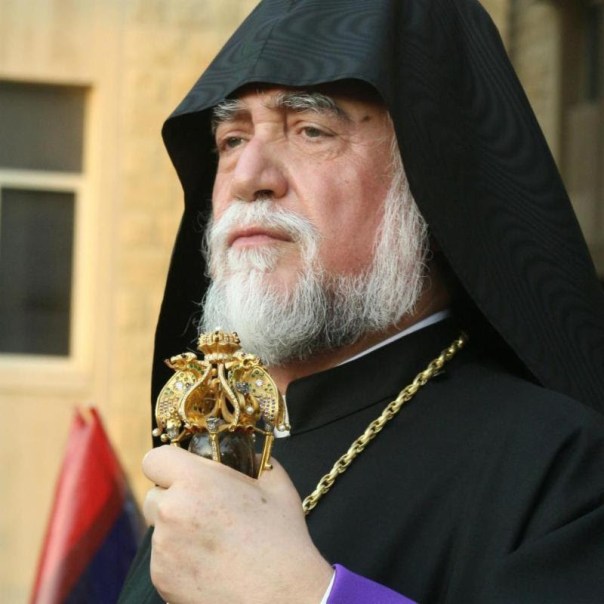
The proclamation will be read in all churches of the Eastern Prelacy on Sunday, January 25.
In his proclamation, the Catholicos notes that our church has become rite-centered, driven by national concerns that often overshadow its religious mission, leading to the marginalization of spiritual life.
As a remedy, His Holiness prescribes familiarity with the Bible and religious literature in general, as well as a fuller understanding of the Divine Liturgy by the faithful. You may read below the full text of the pontifical proclamation:
—
To the Prelates,
The Clergy,
The Community Leaders
of the Great House of Cilicia,
and to the daughters and sons
of our people,
From the Mother Monastery of the Catholicosate of the Great House of Cilicia in Antelias, Lebanon, we greet and bless with Christian love and patriarchal blessings the beloved sons and daughters of our nation, and on the eve of the New Year that opens with the birth of the Son of God, we say, “Christ is born and revealed.” May the life of our nation and homeland be filled with the heavenly truths, goodness, and grace brought by the Son of God to the world.
Dear Armenian people,
Over the years, we have dedicated each year to a matter, concern, or event, that is immediately relevant to our life, calling on the sons and daughters of our nation to remain committed to the object of the proclamation in their thoughts, deeds, and life throughout the year. The testimony of our prelacies and our faithful, as well as our experience, has shown that these proclamations opened new horizons in both our individual and collective life. They were also catalysts for the adoption of new ways of thinking and doing things. Hence, moved by that encouraging precedent, we have decided to proclaim the dawning year of 2026:
Year of Spiritual Renewal
This is not a casual decision—it is an imperative, in view of the diminution of the pivotal importance of the spiritual life in Armenian life. Indeed, this is a worrying issue, which may distance us from our spiritual values and traditions as well as our roots. In other words, it may set us apart from the source of our life—God.
In his letter to the Romans, Paul the Apostle writes: “For those who live according to the flesh set their minds on the things of the flesh, but those who live according to the Spirit set their minds on the things of the Spirit.” He then asserts: “To set the mind on the flesh is death, but to set the mind on the Spirit is life and peace. For this reason, the mind that is set on the flesh is hostile to God; it does not submit to God’s law—indeed it cannot, and those who are in the flesh cannot please God” (Romans 8:5-8).
For the Apostle, spiritual life means appreciating it over the material one and signifying human life with the presence of God, filling it with heavenly values. Let us not forget that in the Christian understanding, the person is above and beyond their physical dimension—they are a spiritual existence, created in the image and likeness of God.
In present times, in a globalized world that is dominated by technology and societies living amid wars and violence, the environmental dangers, economic turmoil, and a multiplicity of other crises, a movement towards spiritual life has become evident everywhere and within every religion. Some others interpret it, on the one hand, as an expression of extremist and radical religious movements and, on the other, as a counterreaction to the steadily growing brutalities and terrorism. There are also those who see the movement towards spiritual life as a divine intervention, in a world that has distanced itself from heaven and is under the aegis of materialism. Whichever the interpretation, a growing tendency and interest—yearning for spiritual nourishment—is discernible, in the current world that is overrun by fame, hedonism, and materialism.
Alongside this development that can be considered positive, we see an exploitation of spiritual life. Sometimes we see scenes on television and social networks about such things as cures for illnesses and strange predictions, which are for the most part falsities and are obviously money-making schemes. Spiritual values are sometimes exploited to organize violent actions and to sow the seeds of hatred. Yet at the same time we witness and hear about contemptuous approaches to spiritual life, considering it meaningless and a thing of the past. The above mentioned dismissive and contradictory reactions and attitudes move us to have correct information, clear views and orientation about the meaning, objective, and especially the importance of spiritual life.
Spiritual Life in Religions
Spiritual life is an essential part of the lifestyle, thinking, and modus operandi of every religion in the world. There is a prevalence of similarities among the three monotheist religions—Judaism, Christianity, and Islam—yet there are also differences in emphasis and expression. In Judaism, spiritual life is manifested through fidelity to the Torah and the literal preservation of traditions, whereas in Islam, it does so by way of the faultless execution of the teachings of the Quran and the Hadith. Eastern religions—Buddhism, Hinduism, Jainism, and Sikhism—following the example of their founders’ life and thinking, emphasize the application of moral principles and the mystical traditions that characterize the monastic life: meditation, yoga, strict fasting, austerity, etc. African religions manifest spiritual life via singing, dancing, or other cultural ways.
Along with other world religions, throughout its history, Christianity has incorporated a number of modalities and traditions related to spiritual life of other religions and has added them alongside its supreme spiritual values and moral principles, endowing them with a Christian meaning, identity, and character. This is a verty common feature in the history of our people, especially in the transition period from paganism to Christianity.
What Does the Bible Say About Spiritual Life?
The Bible contains the annunciation of God, written by persons inspired by the Holy Ghost. Hence, the Bible is a whole, a corpus of divine truths, principles, values, commandments, and teachings. The Old Testament stresses the sinful nature of man and the prophets’ exhortations and reminders to return to God, to rebuild in man the fallen image and likeness of God. The New Testament is a call to man—realized through the incarnation and the evangelization of the Son of God—to live the “abundant life” given by Christ (John 10:10), following the heavenly values and to walk down the road of salvation. Therefore, according to the Bible, spiritual life is the return of man to his heavenly father—God. It is the presence of God in the life of man, as well as following Christ, putting in practice in our daily life the divine truths and values.
Spiritual life is expressed through different ways and traditions in the life of the churches. One of the singularities of Christianity is the fusion of faith and culture. In other words, faith manifests itself by way of a specific culture and the culture acquires a Christian character thanks to the influential presence of faith. This peculiarity does not pertain only to our church—it’s characteristic of every church. This is why, considering the cultural differences among nations, spiritual life has had different manifestations and emphasis in the Christian world. Since antiquity, alongside the biblical teachings and culture, symbolism, mythology, and metaphysics, have had a clear influence on Christian life and thinking in general, as well as on different facets of spiritual life and especially monasticism.
In the Catholic church, in addition to monasticism, the stress is put on the theological thought. In the Protestant churches, the Bible has been a central presence as the source of spiritual life. As we pointed out, African churches emphasize the importance of music and dance as a true expression of spiritual experiences. Asian churches, as they are in the minority amid other religions, have borne the powerful influence of the mentality and lifestyle of the majority religions. And African-American Evangelical churches pay attention mostly to expressiveness, influenced as they are by African cultural traditions. Therefore, spiritual life today presents a variegated picture in the Christian world. Naturally, all of this is meant to live faithfully in accordance with the heavenly values—living the presence of God in the earthly life.
In this context, two aspects of life in Western Christianity are worrying and unacceptable: first, the gradual distancing from the traditional values and the theological teachings and the adoption of the traditions and ways of the Eastern religions; second, splitting the act of “believing,” as an individual experience, and “belonging” to the church by baptism—giving preference to the former and evidently disregarding the latter. Churches have reacted to these developments with severity.
Spiritual Life in the Armenian Church
A cursory look at the history of the Armenian Church presents the following picture.
It is through the rites that spiritual life has manifested itself in the Armenian church. Since antiquity, rites have been a central presence in the development of the Armenian Church’s theological thinking, the formulation of dogma, and the shaping of spiritual and moral values.
This can be considered a general feature among Orthodox churches. Indeed, the source of vespers, the administration of sacraments, the celebration of saints’ feasts, and church traditions has been the ritual life, naturally having at its center the Holy and Immortal Divine Liturgy.
Monastic life, as immediately related to rite, has been a major framework for spiritual life. Far from daily life, and with the comprehensive and faithful execution of the church’s rites—as well as a strict religious lifestyle—monastic life has been the most egregious and comprehensive expression of spiritual life for the Armenian Church, as well as for the Orthodox and Catholic Churches. Today, unfortunately, monastic life has experienced a retreat driven by the internal circumstances of our church. The rebuilding of monastic life has to take a preeminent place in the reform agenda of the Armenian church.
Culture has become a fundamental means for the development and expression of our moral, ritual, theological, dogmatic, and generally spiritual values. It is not possible to detach spiritual life with all its dimensions from Armenian culture, and vice versa.
As in the case of every church, spiritual life of the Armenian Church, too, throughout its history, has been exposed to the influence of its milieu. In the Near East, our church—having permanent links to the Syriac, Greek, and Latin spiritual values and traditions—has taken some elements from them, Armenizing them and merging them with its traditions. In the West, too, the spiritual life of our church has always been exposed to the influence of its surroundings. Even though the modes and emphasis in which the spiritual life of the Armenian Church have changed somewhat over time, our spiritual life has managed to preserve its unique identity—the Holy Scriptures; the literature penned by our patriarchs; the life of our saints, and our centuries of experience have been the source of inspiration and a compass.
Spiritual Life Today
In view of the existing circumstances today, the spiritual life of our people does not have the same vitality and fidelity as it did in the past. In this sense, the following points are in order:
First, our church has become fundamentally rite-centered. Naturally, like Orthodox churches, the Armenian Church continues to pay primary attention to the ritual life, considering its central role in the development of spiritual life. Therefore, based on that, we believe it is mandatory and urgent to introduce reforms in the ritual life—adjusting to current circumstances and demands, enriching traditions and collective feasts as well as the active participation of people.
Second, again due to circumstances, the national factor has become preponderant in the life, mission, and service of the Armenian Church in the course of its history—at the expense of the spiritual dimension. Especially following the Genocide, in the Armenian Diaspora, driven by the concern of the preservation of the Armenian identity, the Church has mostly emphasized its national role. Without ignoring the importance of national values, the Church needs to stress through special initiatives the vital relevance of spiritual values in the Armenian life as a source of our moral, cultural, educational, and national values.
Third, a realistic approach today shows that within our religious circles, spiritual life has generally begun to become perfunctory and performative and, within the Armenian reality, marginal. True—during the feasts, our churches are full of the faithful. True—religious brotherhoods are active within our communities. It is also true that the Catholicosate of the Great House of Cilicia and its prelacies attribute special importance to the growth of spiritual life—with Bible studies; religious academies; saints’ feasts; organizing Christian education and expanding its outreach, as well as the increasing participation of the faithful in the ritual life. Nevertheless, instilling spiritual values into our individual, family, and collective life still calls for more influential and active initiatives and consistent work. How can it be done?
Before addressing that question, we must take a glance at the distinctive aspects of our spiritual life.
What is Spiritual Life
For the correct understanding of spiritual life, we have to consider the following points:
– Spiritual life is such a quality of life that has Christ himself—his teachings, the moral of his miracles, his cross and resurrection—at its core. In other words, the mystery of the incarnation of the Son of God and his salvation goal, assimilated into the life, thinking, and actions of the person. Paul the Apostle states: “And it is no longer I who live, but it is Christ who lives in me. And the life I now live in the flesh I live by faith in the Son of God, who loved me and gave himself for me” (Galatians 2:20). This is the foundation of spiritual life.
–Spiritual life is a path of life inspired by the Holy Spirit, a permanent search for
faith that imbues life with meaning and value. “Examine yourselves to see whether you are living in the faith. Test yourselves. Do you not realize that Jesus Christ is in you?” (2 Corinthians 13:5) asks the Apostle.
– Spiritual life is the life of someone who is invited to salvation by the grace of God and the undertaking of walking down the road of salvation in faith and faithfulness, always being careful not to drift away from the road of salvation, as the Apostle reminds us (Hebrews 2:1).
– Spiritual life is not self-centered, removed from earthly realities. Amid the din in the world, it is a life lived with heavenly values, love, and sacrifice, “to keep oneself unstained by the world,” tells us the Apostle (James 1:27).
–Spiritual life is not a goal in itself; Christians do not live their life just for
themselves, but fundamentally for the fulfillment of the heavenly truths on earth, for the glory and kingdom of God.
– Spiritual life is fundamentally a life of prayer. The God-man relationship is the foundation of spiritual life. Christ underlined the essential value of prayer, and he even taught his disciples how to pray (Matthew 6:5-14, Luke 11:1-13).
– Spiritual life is one imbued with faith and fortified by hope. Indeed, having had his earthly life strengthened by his faith in Christ and hope, Paul the Apostle testifies: “ We are afflicted in every way, but not crushed; perplexed, but not driven to despair; persecuted, but not forsaken; struck down, but not destroyed” (2 Corinthians 4:8-9). In another letter, he says, “suffering produces endurance, and endurance produces character, and character produces hope” (Romans 5:3-4).
– Spiritual life is one of struggle, armed with the power of the Holy Spirit. It’s a struggle against decay and sins, the bad and the evil in the world. A struggle against evil with the faith that goodness will prevail over it, with a strength forged by willpower: “Do you not know that friendship with the world is enmity with God?” (James 4:4).
– Spiritual life is helping others following Christ’s example; it’s serving the poor, the needy, the sick—with infinite love and devotion: “Religion that is pure and undefiled before God, the Father, is this: to care for orphans and widows in their distress” (James 1:27).
– Spiritual life is not only lived with heavenly truths—it is a mission of living them by example and spreading them. Indeed, in the testimony of Paul—who turned his life into a mission
– “Those who speak in a tongue build up themselves, but those who prophesy build up the church” (1 Corinthians 14:4).
– Spiritual life is unreservedly spreading love where love is missing, where the seeds of hatred and evil have been sown. Spiritual life is loving those who hate and persecute us. Let us listen to the Apostle’s message: “Bear with one another and, if anyone has a complaint against another, forgive each other; just as the Lord[a] has forgiven you, so you also must forgive” (Colossians 3:13).
– Spiritual life means staying away from a life that overflows with joy, fame, and material comfort and instead walking in the footsteps of Christ, bearing the cross that stands for love, submission, and service, as Christ has advised (Matthew 16:24):
– Spiritual life is not one of staying away from dogma and theological teachings or even turning our backs to them, but one embedded faithfully in the identity and collective life of the church.
– Spiritual life is not an individualistic one, detached from the church. It is not an instance of living spiritual and moral values outside the church, but one lived within the collective life of the church, with an emphasis on spiritual values.
– Spiritual life is one of patience and submission, subsumed within the active presence of the Holy Spirit. Paul the Apostle invokes the example of his own life and tells us to accept distress, pain, and suffering (2 Corinthians 6:4-6), and adds, “in honor and dishonor, in ill repute and good repute. We are treated as impostors, and yet are true” (2 Corinthians 6:8).
– Spiritual life does not mean getting away from the world but, valuing the spiritual over the material, to fight against the demigods of idolatry and paganism of the new times, which surround us in visible and invisible ways.
– Spiritual life does not draw distinctions between the faithful and the priest, considering the former a follower of the church’s tenets and traditions and the latter as the creator of their spiritual life. Such a distinction is not correct. At the same time, belonging to the church does not naturally lead the individual to spirituality. As we said, spiritual life is one lived within the collective life of the church, stressing spiritual values.
So, how hard it is to live a spiritual life in a world full of evil and sin. Nevertheless, the Christian who by way of baptism has promised to follow Christ, is called upon to live in Christ. This is how the life of the Christian person must be.
We have to be careful about erroneous understandings and expressions of spiritual life. We must pay attention in our spiritual life to faith and reason, as well as to a harmonious relationship between church rites and traditions—otherwise that may distance the individual from the correct understanding of the Bible and dogma and lead them to a non-Christian sphere. We must also stay away from excessive demonstrations in our spiritual life, forgetting the essential and prioritizing the externalities. Let us always remember the parable of the Pharisee and the tax collector (Luke 18:9-14).
Fatherly Recommendations
After providing a general overview about the significant facets of spiritual life, once again we want to offer the following fatherly recommendations on how to live a spiritual life and grow in it, enriching and giving meaning to our life with spiritual values:
1) In the first place, the Bible has to be an inseparable part of our life. As we said, the Bible is not a common book. The truths, principles, and values of Christian life are laid down there. Therefore, knowing the Bible is essential—its daily reading must become a normal part of our life. Yet beyond reading it and familiarizing ourselves with it, we must live its message, turning it into the compass of our thoughts, actions, and lifestyle.
2) Parallel to the Bible, we consider it essential to read religious literature and become conversant in exegetical interpretations, on condition that they not be random volumes but be prepared by experts and have been approved by church authorities.
3) The organization of conferences and seminars about spiritual values by the Prelacies and the participation of the sons and daughters of our nation are important to complement the truthful knowledge of spiritual values.
4) Explaining and conveying to the public the meaning of and reason for the Holy and Immortal Divine Liturgy and generally the ceremonies and sacraments of the church is also vital, so that the faithful may familiarize themselves with the truths, teachings, principles, and values manifested in our ritual life.
5) The celebration of saints’ feasts and the revitalization of traditions and, in that context, emphasizing the importance of fasting, are influential means for our faithful to nourish their lives with spiritual values.
6) We think it is essential—as a refresher—to read frequently the Nicene Creed, which expresses the fundamental principles of the dogma of the church. The same is true for the Confession of Sins, which describes the human sins and their renunciation by the Christian person.
7) It would be advisable for our faithful to follow church ceremonies with accessible books of hours, in which they can find the Holy Week services and sacraments, revised, and translated into Western Armenian by the Holy See.
8) The reorganization of humanitarian and pastoral services by parish churches and strengthening church-people bonds and expanding them are vital factors for helping spiritual values take deeper root within Armenian life.
9) We consider it important to promote the religious brotherhoods that operate under the patronage of our church and, when needed, to create such movements.
10) The meaning of and reason for the Holy and Immortal Divine Liturgy is communion with the body and blood of Christ. It is greatly encouraging to see the growing number of the faithful who take communion every Sunday. This practice that nourishes our spiritual life must continue.
11) The help provided by centers devoted to humanitarian work and social services, as well as the support for the needy, are true expressions of spiritual life.
12) It is highly advisable for our parish churches to remain open to our faithful, allowing them to visit the house of God at any time and live the presence of God in their lives by way of individual prayer.
It is still possible to list other features of spiritual life and initiatives that may further strengthen the renewal of spiritual life.
Dear Armenian sons and daughters, let us live our spiritual life through the means we prefer the most, yet never staying away from our church, the Bible’s teachings, the dogma, teachings, traditions, and mission of our church. Let us live our spiritual life staying away from performative behavior for the sake of appearances and serving and lending a helping hand to the needs of our nation and homeland as the supreme expression of love.
We expect that, with our prelacies’ Prelates, Religious Councils, and clergy’s planned and consistent work, the spiritual life of our people grows and flourish, for the sake of the further splendor of our church and the establishment of the kingdom of God.
With patriarchal blessings and fatherly love,
Prayerfully,

CATHOLICOS ARAM
GREAT HOUSE OF CILICIA
January 1, 2026
Antelias, Lebanon


 St. Stephen's Armenian Apostolic Church of Greater Boston